 Shakesphere
The first time I asked him whether he was a nomad, he looked past me.
Not through me. Past me.
There was a difference.
Beyond my shoulder, a black goat had separated itself from the others and was walking toward the road. The man lifted one hand. The goat stopped. He lowered it. The goat moved again.
I repeated the question.
“Nomad?”
This time he looked at me, though not with the recognition I had hoped for. I had carried the word across half the Changthang as if it were a small gift. I thought it might open a door. A history. At the very least, a conversation.
Instead, he pointed at the goat.
A truck was coming.
For a few seconds, the problem of identity was postponed by traffic.
That should have taught me something.
It did not.
I had been in Ladakh long enough to know that visitors arrive with nouns. We carry them the way earlier travelers carried trunks: monastery, wilderness, tradition, silence, nomad. The nouns are useful. They help us unpack the world quickly. They allow us to return home with sentences.
The problem is that people rarely live inside nouns.
The man crossed the road after the goat. I followed because following seemed easier than admitting that my question had failed.
He wore a wool cap pulled low over his forehead and a jacket with a broken zipper. In one pocket was a mobile phone. In the other, two fistfuls of salt.
I remember the salt because I had expected something else.
A prayer wheel, perhaps.
A knife.
Some small object that would confirm the story I had already begun to make of him.
Instead: salt.
Reality has a way of refusing to decorate itself properly.
—
The word nomad has a beautiful life in English.
It suggests movement without bureaucracy. A tent under stars. A person unclaimed by walls. It has been adopted by people who work from cafés, by companies selling luggage, by hotels that want to sound less like hotels. There are digital nomads, luxury nomads, urban nomads, creative nomads.
The word has become so light that it can travel anywhere.
On the Changthang, movement is heavier.
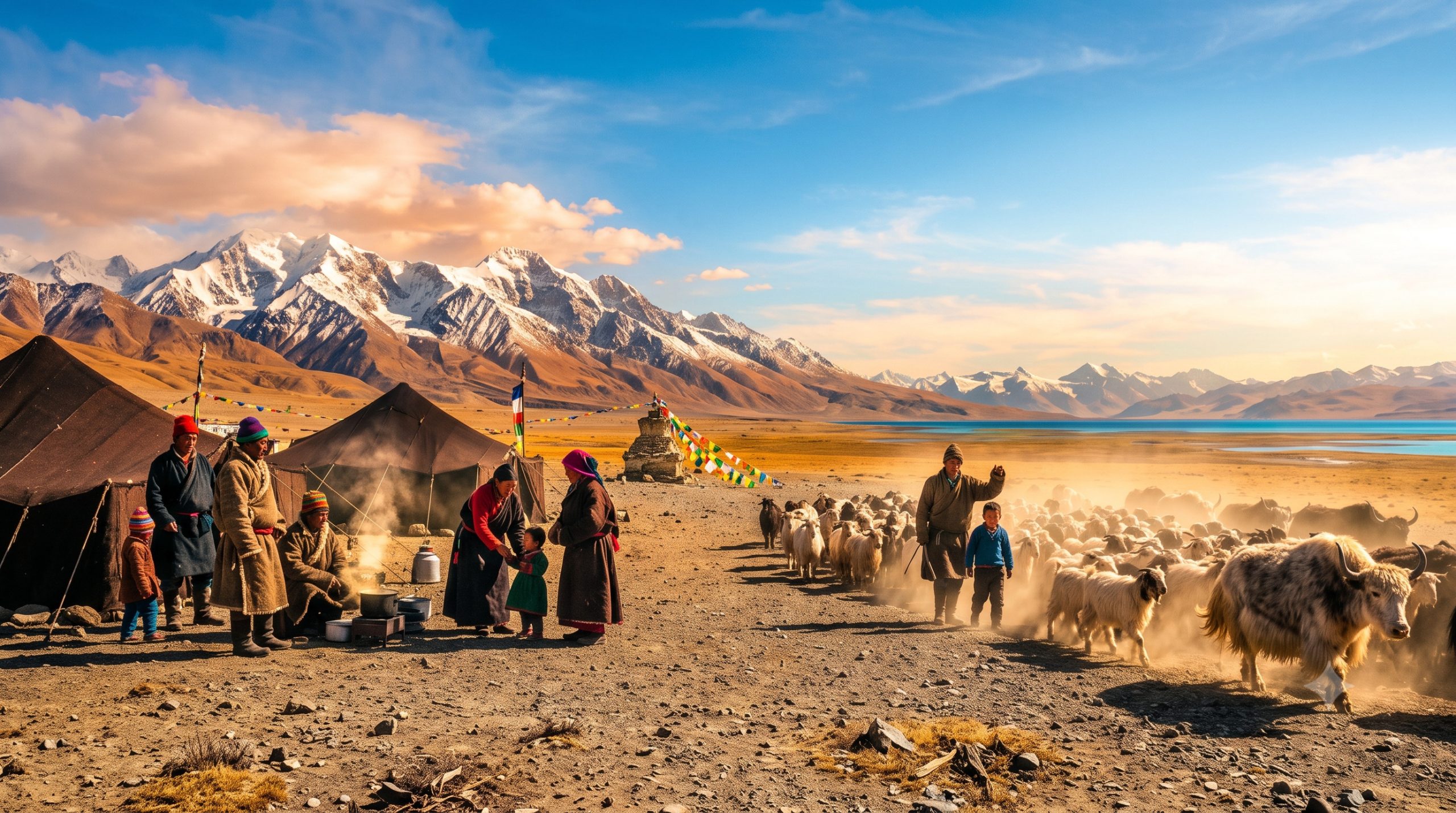
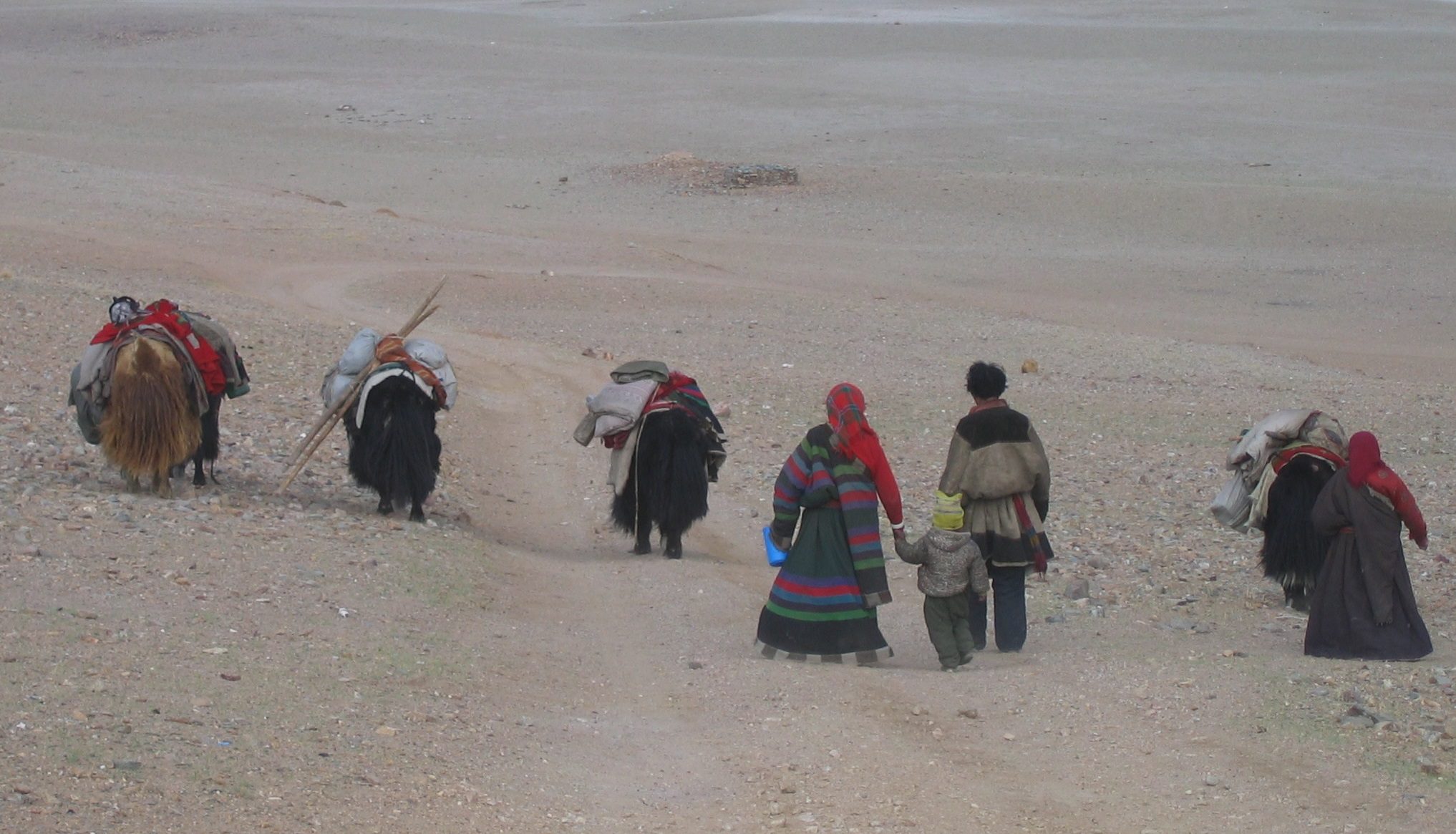
Pastoral movement in Ladakh has long been shaped by animals, grazing conditions, seasons and access to high-altitude pasture. It is neither random nor purely romantic. It is work calibrated to weather, fodder, distance and household need.
And it changes.
A road changes it.
A school changes it.
A market changes it.
A government scheme changes it.
A son who finds a job elsewhere changes it.
A daughter who does not wish to spend winter in the same way her grandmother did changes it.
A mobile tower changes what distance means.
None of this cancels pastoral life. None of it proves that something authentic has been lost. It only makes the picture more difficult than the noun.
I began to suspect that difficulty was exactly what I had been trying to avoid.
The man had no such problem.
He was busy.
—
Inside the tent, an old woman poured tea into a metal cup and watched me ask the man the same question in three different ways.
Are you a nomad?
Do you move every year?
Where is your home?
He answered the second question first.
Then the third.
The first remained untouched.
This irritated me more than it should have.
I had come a long way to ask a question he did not seem interested in answering.
The woman laughed.
“What?”
She shook her head.
I asked the man whether she was laughing at me.
He shrugged.
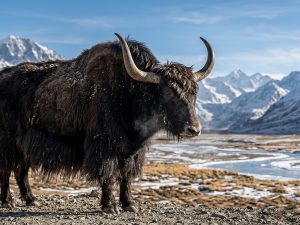
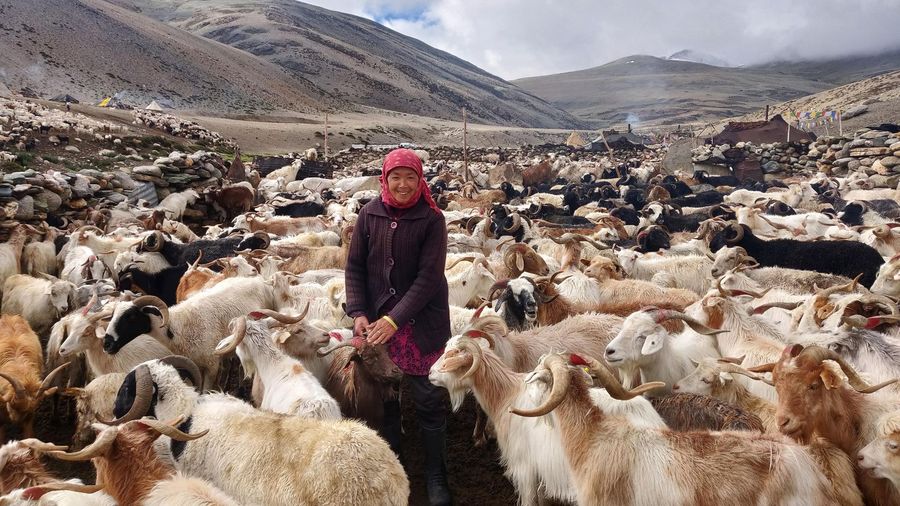
Outside, the animals made a low, shifting sound, thousands of small decisions passing through a herd.
For the first time it occurred to me that perhaps I had mistaken vocabulary for intimacy.
—
Travel writing has always liked people who appear to be disappearing.
There is something irresistible about the last of anything.
The last village before the border.
The last shepherd.
The last caravan.
The last untouched valley.
The last people living as they have for centuries.
“For centuries” may be one of the most dangerous phrases in travel.
It can freeze a person more efficiently than winter.
Once frozen, people become easier to admire.
They cannot complain about school fees.
They cannot want a better road.
They cannot prefer electric light to darkness.
They cannot be bored.
They cannot be ambitious.
They cannot send their children away and miss them.
They cannot calculate wool prices.
They cannot be disappointed by government policy.
They cannot watch a video on a phone.
They cannot decide that some traditions are exhausting.
They cannot decide that other traditions are worth keeping.
They must remain exactly where the visitor found them, otherwise the visitor feels cheated.
This is the cruelty hidden inside certain kinds of admiration.
We call people timeless because time is inconvenient to the story we want.
—
By 2026, the government in Ladakh was still intervening directly in the Pashmina economy: incentives for herders, procurement support, livestock schemes that recognized seasonal migration and grazing patterns.
Nothing here is outside history.
Nothing ever was.
Even the plateau, which from a distance looks like geography without clocks, is full of schedules.
Birth.
Snow.
Grass.
Migration.
School.
Markets.
Road openings.
Veterinary visits.
Deadlines.
Phone calls.
The animals themselves are a calendar.
Perhaps that is why the English word nomad began to feel strange in my mouth.
It made movement sound like a philosophy.
For the people actually moving, movement could also be work.
—
One afternoon, I watched a young man photograph an older herder.
The young man carried a camera that cost more than many motorcycles.
He crouched.
He stood.
He moved left.
He moved right.
The older man waited.
Behind him, the plateau was enormous.
The photograph, even before it was taken, was beautiful.
This worried me.
The photographer asked the man to step a little farther from the motorcycle.
The motorcycle was ruining the frame.
I knew immediately what he meant.
That worried me more.
The motorcycle was bright, modern and ugly. It said that the person in the photograph belonged to the same century as the photographer.
The old man moved.
The shutter clicked.
For one two-hundredth of a second, modernity disappeared.
The picture was perfect.
I imagined it later on a wall in Delhi, London, Paris, Tokyo.
The caption would need only two words.
Nomad, Changthang.
A whole life compressed without resistance.
I do not blame the photographer.
That would be too easy.
I have done the same thing with sentences.
—
The most dangerous photographs are not false photographs.
They are true photographs with everything inconvenient placed outside the frame.
Writing can do the same.
I can tell you about wind moving through the wool of goats and leave out the road.
I can tell you about tea boiling in a blackened kettle and leave out the subsidy.
I can tell you about a family moving between pastures and leave out the child studying in Leh.
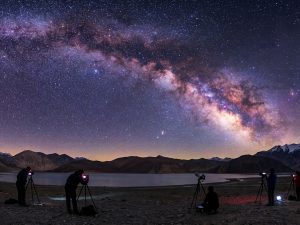
I can tell you about stars and leave out the phone charging beside the stove.
Every detail could be true.
Together, they could become a lie.
Not a factual lie.
A grammatical one.
Arrange enough true things in the right order, and you can force an entire people into the past tense.
—
That evening, the man asked me whether I knew tomorrow’s weather.
I said I did not.
He took out his phone.
There was no signal.
He held it up anyway.
The old woman laughed.
This time I laughed too.
The word nomad was still somewhere between us, but it had become smaller.
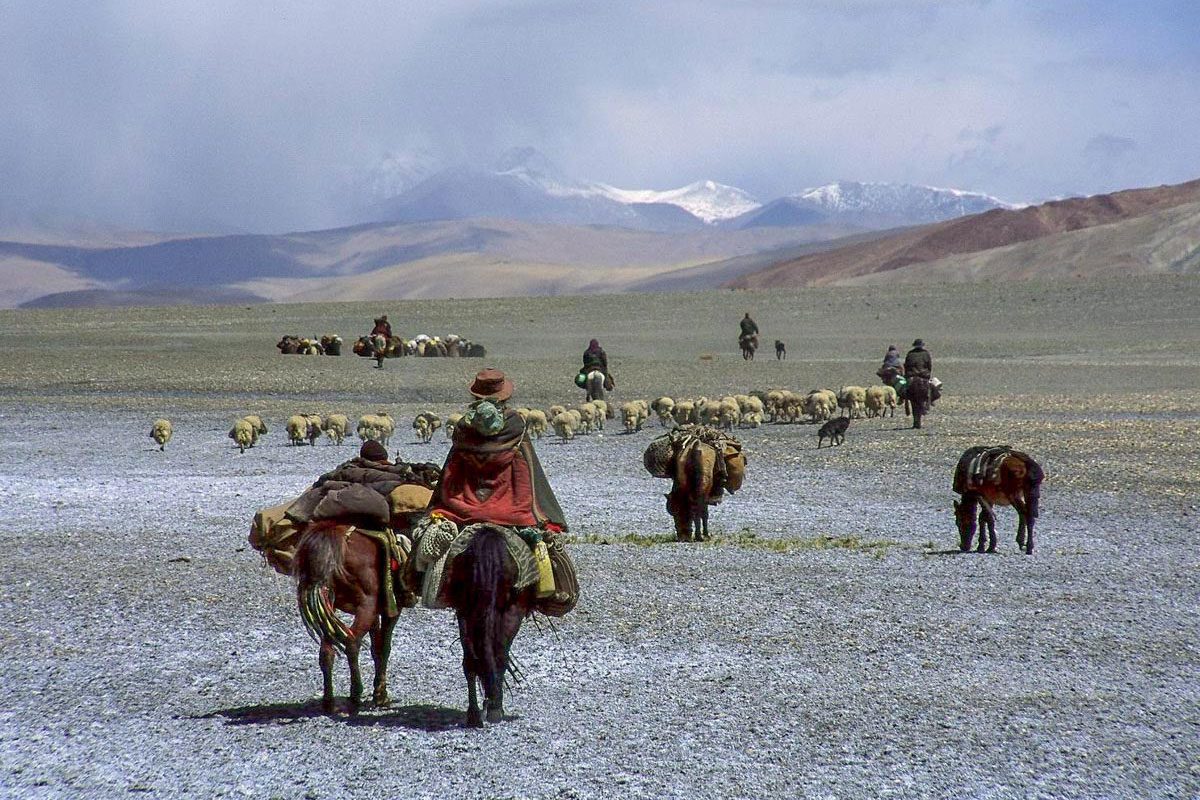
Outside, the goats had settled into a dark mass.
One stood apart.
The man noticed immediately.
Of course he did.
His attention had been moving all day along lines I could not see.
Mine had been moving along words.
—
Perhaps every traveler commits the same error.
We arrive in another person’s life at the exact moment that life becomes symbolic to us.
A farmer becomes the farmer.
A monk becomes the monk.
A woman carrying water becomes the woman carrying water.
A herder becomes the nomad.
The article arrives before the person.
The grammar is already waiting.
Maybe this cannot be avoided completely.
Language categorizes. Cameras frame. Memory edits. Even love selects.
The question is not whether we can stop naming the world.
The question is whether we can notice the moment when the name begins to replace attention.
That is a smaller ambition.
It may also be harder.
—
The next morning, the animals moved before I was ready.
The sky was pale. The ground was hard with cold.
I was still inside looking for a sock.
By the time I stepped out, the herd was already flowing away from the settlement, not dramatically, not cinematically, but with the practical momentum of work already begun.
The man walked behind them.
I called to him.
He turned.
For a moment I almost asked the question again.
I wanted a better answer.
A quotable answer.
Something that would justify the journey.
Instead, I asked where they were going.
He pointed.
I looked.
There was nothing there that I could distinguish from everything around it.
But he saw a destination.
I saw a landscape.
This, finally, was enough.
He started walking again.
The animals moved ahead of him.
Far away, a truck appeared on the road, no larger than a bead of light.
The word I had brought with me was still available.
I could use it.
It was not incorrect.
It was simply no longer large enough.

 Shakesphere