 Shakesphere
The Chadar Trek is Ladakh’s famous winter journey on the frozen Zanskar River, but the most important thing to understand is that it is never guaranteed simply because it is January or February. The route exists only when the river forms sufficiently stable ice and the authorities, reconnaissance teams and local operators consider the available section safe enough to use.
That became especially clear in 2026, when insufficient ice formation disrupted the season. For anyone planning the Chadar Trek now, the right questions are not only “What is the itinerary?” and “How much does it cost?” but also: Has the river been assessed? Which section is authorised? What happens if conditions change?
This guide explains the route, season, difficulty, preparation, temperatures, costs, safety and the practical decisions involved in planning the Chadar Trek from Leh. It also explains why old fixed itineraries should be treated as historical models rather than promises for a future winter.
Chadar Trek at a Glance
| Question | What travellers should know |
| Where is it? | On winter sections of the Zanskar River in Ladakh, approached from Leh |
| Main experience | Walking on river ice through the Zanskar Gorge |
| Traditional season | January to February, subject to ice conditions, reconnaissance and official approval |
| Route | Variable by season; the authorised operational section matters more than an old fixed map |
| Duration | Usually planned as a multi-day winter expedition including acclimatization in Leh |
| Difficulty | Cold, altitude, slippery and unstable ice, long walking days and difficult evacuation |
| Preparation | Endurance, balance, cold management and proper acclimatization are more important than technical climbing skills |
| Can it be cancelled? | Yes. A season or departure can be postponed, shortened, suspended or cancelled when ice is unsafe |
What Is the Chadar Trek?
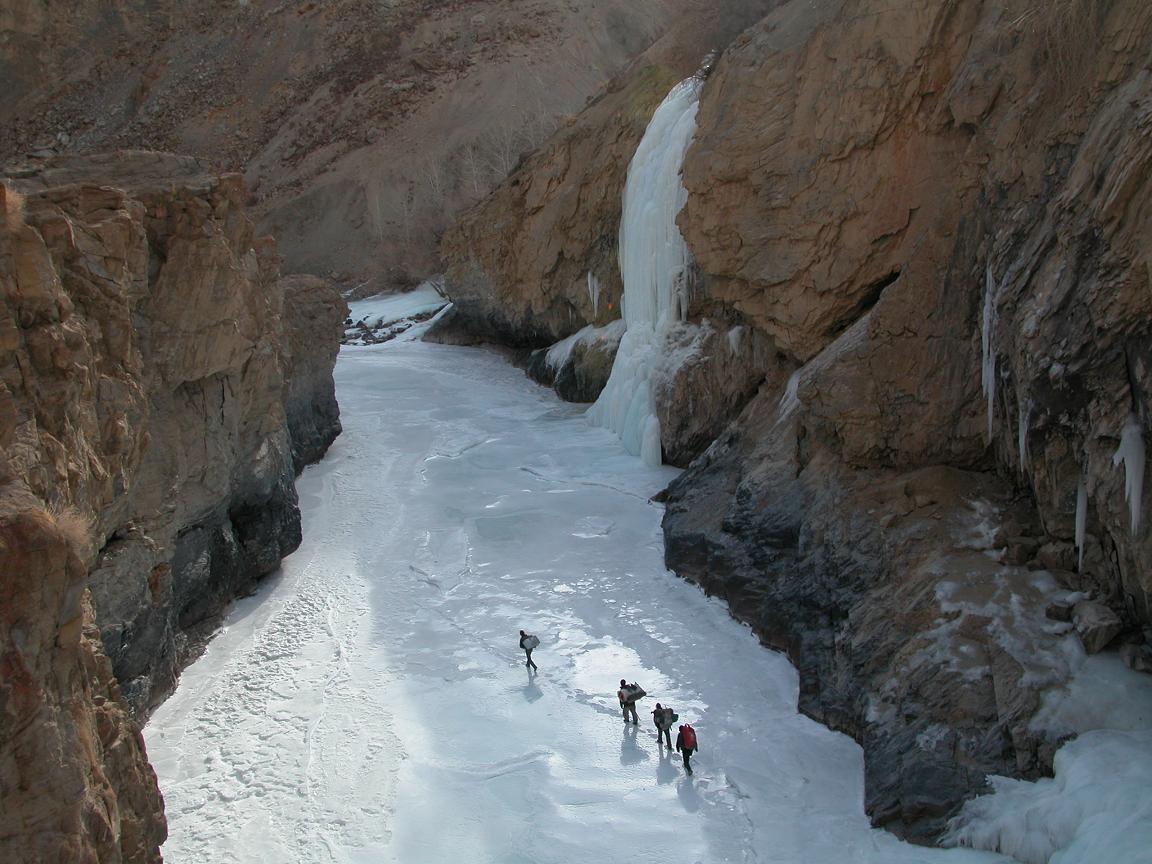
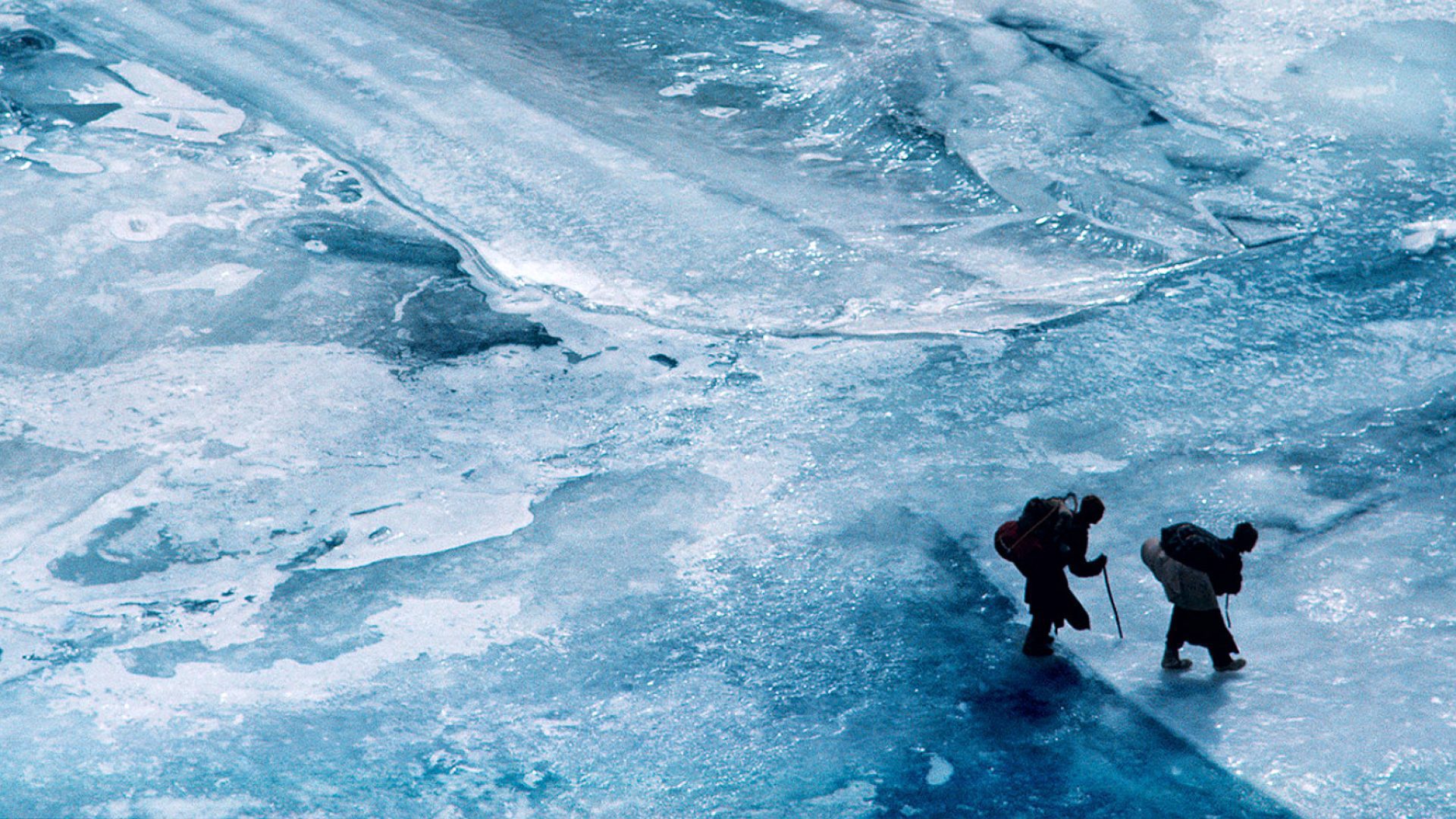
“Chadar” means a sheet or covering, a fitting description of the winter ice that can form across sections of the Zanskar River. When conditions are right, trekkers move along frozen sections of the river beneath the steep walls of the Zanskar Gorge, passing ice formations, frozen waterfalls, snow-covered shelves and stretches of open water.
Unlike a conventional mountain trek, the Chadar has no permanent trail underfoot. The walking surface can change from hard clear ice to snow-covered ice, rough frozen plates, slush or open channels. The usable line can change during the trek itself.
This is why local knowledge is fundamental. The Chadar should never be understood as a fixed line on a map that can be repeated regardless of temperature, water flow and ice formation.
Chadar Trek 2026: What Happened?
The 2026 winter demonstrated how condition-dependent the trek has become. The expected season was disrupted after the river failed to develop enough continuous stable ice. Reconnaissance found unsafe sections, and trekking did not proceed as travellers might have expected from a conventional January–February calendar.
The lesson is not that the Chadar has permanently disappeared. It is that a future departure must be confirmed against the conditions of that particular winter. A responsible operator must be willing to shorten, postpone or cancel a trip rather than force an itinerary onto unsafe ice.
Chadar Trek 2027: What Travellers Should Know Now
For anyone planning the Chadar Trek in 2027, January and February should be treated as a provisional winter window rather than a guaranteed operating season. The usable route will depend on how the Zanskar River freezes, the current season’s reconnaissance, official safety decisions and the section that can actually be operated.
The 2026 winter is an important warning against booking on the assumption that a date alone makes the trek possible. Plan enough acclimatization time in Leh, keep surrounding travel arrangements as flexible as practical, and expect the final route or operating status to remain subject to real winter conditions.
The History of the Chadar
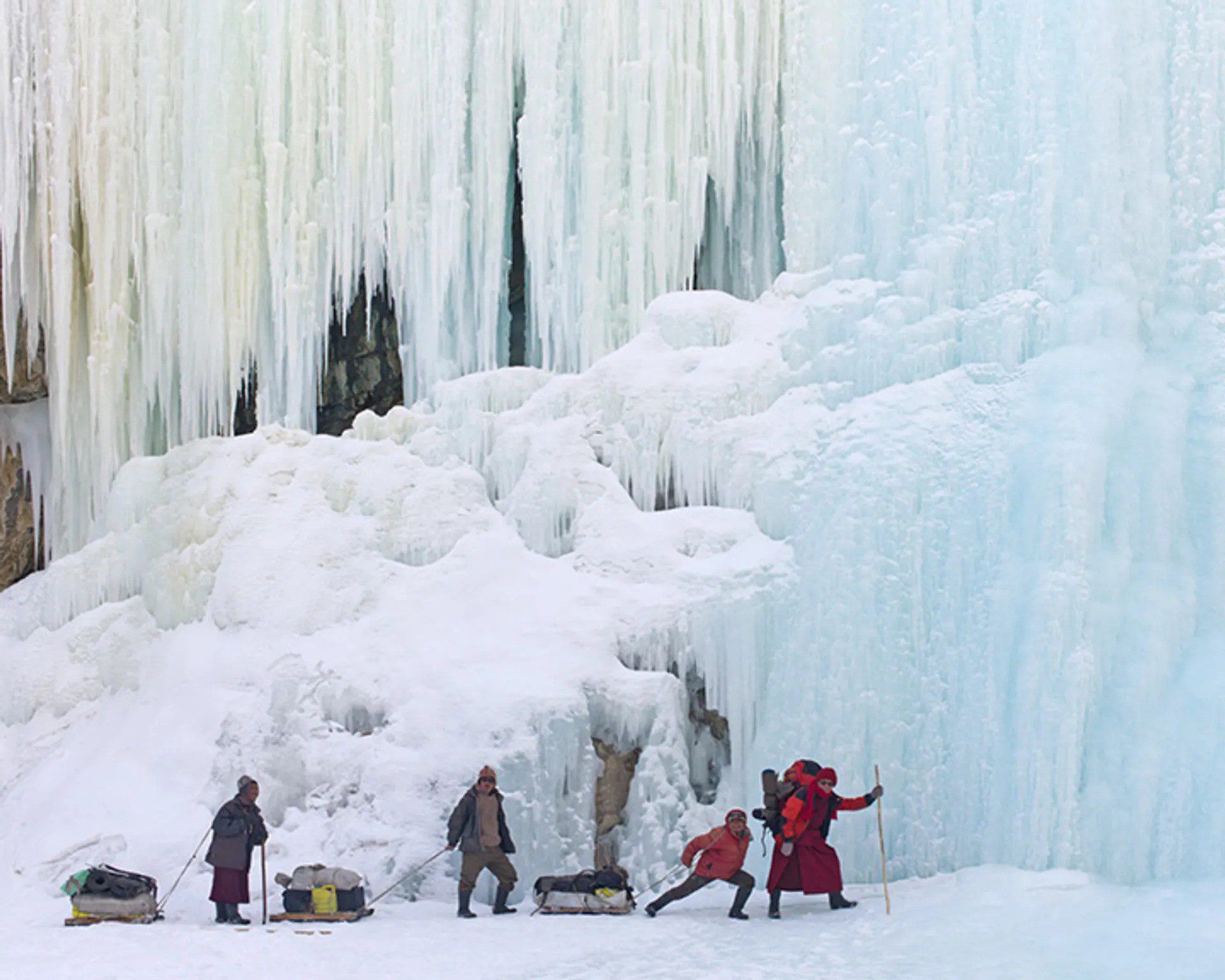
Long before the Chadar became an adventure trek, the frozen Zanskar River formed part of winter life for communities in Zanskar. When high mountain routes were blocked, the river corridor helped people maintain connections and move supplies through the coldest months.
That history matters. Visitors are not walking through a landscape created for tourism; they are entering a corridor shaped by generations of local knowledge and adaptation to an exceptionally severe mountain winter.
Road development is changing this relationship. Better winter connectivity reduces the need to depend on the frozen river for transport, while tourism has transformed the Chadar into one of India’s best-known winter trekking experiences.
Best Time for the Chadar Trek: Think in Terms of Ice, Not Dates
January and February are traditionally associated with the Chadar because they include the coldest part of Ladakh’s winter. They are a planning window, not a guarantee.
A better sequence is to choose the winter period, allow enough time in Leh, and then confirm the current season’s reconnaissance, approved route and operating status before treating the trek as fixed.
- Use January and February as the traditional planning window.
- Do not assume that a departure date proves the river is safe.
- Check whether reconnaissance has been completed for the current season.
- Confirm the authorised start point, end point and camps.
- Keep flights and surrounding travel plans flexible where possible.
On the Chadar, the river outranks the calendar.
How to Check Whether the Chadar Trek Is Open
Before committing to a winter trip specifically for the Chadar, ask for current-season evidence rather than relying on an old itinerary or advertisement.
- Check recent District Leh or Ladakh Administration notices.
- Ask whether reconnaissance has been completed.
- Confirm the currently authorised trekking section and camps.
- Ask what medical, communication and rescue arrangements are operating.
- Ask whether groups are actually using the authorised route that season.
- Understand the operator’s cancellation and alternative-arrangement policy.
This distinction is particularly important when booking months ahead. An operator can sell a planned departure in advance, but nobody can guarantee the condition of river ice months before the trek.
How to Reach the Chadar Trek from Leh
For most travellers, Leh is the logistical base. You first reach Leh, spend the required time acclimatizing, complete any current medical, registration or administrative formalities, and then travel by road toward the authorised access point for that winter.
Older itineraries commonly describe the approach through the Leh–Nimu–Chilling side. Road development along the Zanskar corridor means the precise place where walking begins can change. The practical transfer for your departure should therefore be confirmed after the operational route is known.
Do not plan to land in Leh and begin the trek immediately. Acclimatization is a core part of the itinerary, not optional waiting time.
Chadar Trek Route and Distance
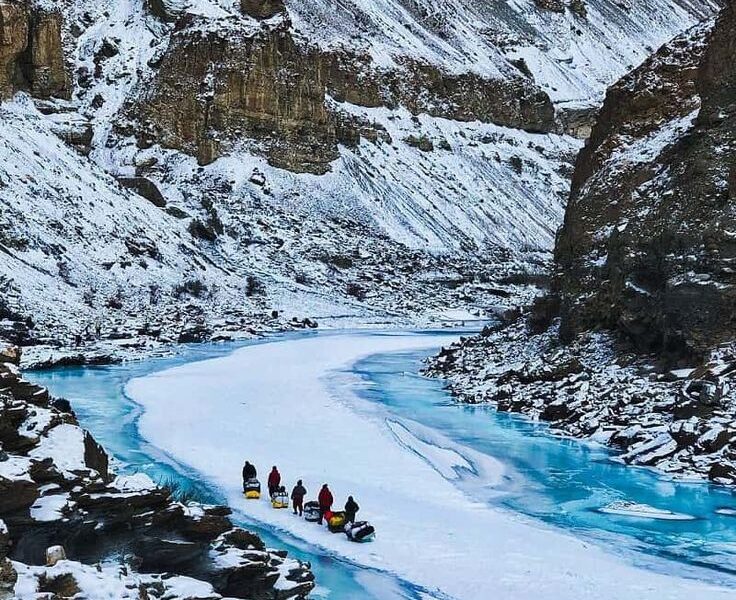
Many older guides describe a roughly 100-kilometre journey with a standard turnaround toward Nerak. That remains useful for understanding the classic trek, but it should not be treated as a guaranteed commercial route today.
Authorities and tourism stakeholders have had to consider ice, road works, access, campsites, medical support and rescue logistics when deciding what section can operate. There are therefore two useful ways to think about the route.
The classic Chadar route
Traditional itineraries may mention Chilling, Tilat Sumdo, Tibb and Nerak and describe a longer outward-and-return journey along the frozen river. These names remain part of the history and identity of the trek.
The operational route
This is the section that can actually be used during a particular winter after current conditions and logistics have been assessed. It is the route travellers should care about when choosing a departure.
If two websites advertise different distances, that does not necessarily mean one is wrong. They may be describing different historical itineraries, road access points or seasonal operating plans. Ask what route the operator expects to use and how it will change if the authorised section changes.
A Realistic Chadar Trek Itinerary
A useful itinerary should separate the Leh acclimatization period from the days on the river and leave room for conditions to affect the schedule. The exact trekking stages depend on the authorised route, but a planning framework can look like this:
| Stage | Typical purpose |
| Arrival in Leh | Rest after arrival at altitude; no immediate high-altitude excursion |
| Leh acclimatization | Continue acclimatization and complete current formalities, equipment checks and briefing |
| Transfer to trek access | Drive toward the current authorised river access point and begin the expedition if conditions permit |
| River trekking days | Walk the approved frozen-river section with camps determined by the current route |
| Return | Leave the river and drive back to Leh |
| Contingency | Keep flexibility for route changes, delayed access or cancellation |
Be cautious with any itinerary that promises exact river camps many months in advance without explaining that the operational route can change.
What a Chadar Trek Day Is Really Like
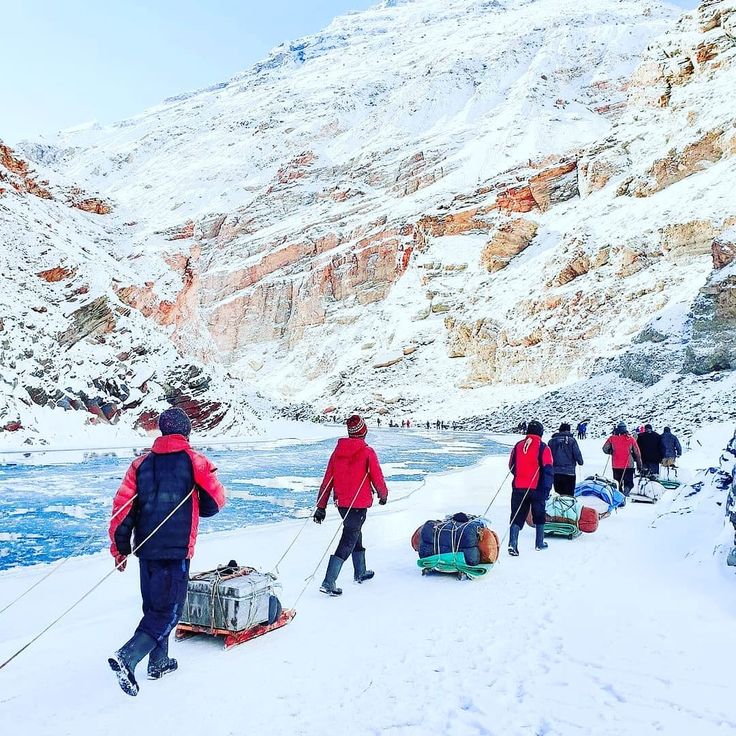
A day on the Chadar is less about climbing and more about adapting. Trekkers can spend hours moving over irregular ice, learning how to place their feet on slippery surfaces and following the line chosen by local guides.
Progress is not always continuous. Guides may stop to inspect a section, move around open water or change the line because the surface has deteriorated. The safest route is not necessarily the shortest.
The cold changes ordinary routines. Water can freeze, batteries lose charge quickly, gloves cannot casually be removed for long periods, and wet footwear or socks require immediate attention. Even packing in the morning can take longer than on a summer trek.
Chadar Trek Difficulty
The Chadar is generally not a technical mountaineering expedition, but describing it as easy because there is little conventional ascent is misleading. Its difficulty comes from the environment.
- Prolonged exposure to severe winter cold.
- Slippery, rough and sometimes unstable ice.
- Open water and changing river conditions.
- Long hours walking in bulky winter clothing.
- Altitude and the need to acclimatize in Leh.
- Limited shelter and basic expedition camps.
- Potentially difficult evacuation from the gorge.
A fit regular hiker may find the terrain technically straightforward yet still struggle with cold, altitude or repeated days on ice. Conversely, speed is of little value if a trekker cannot move carefully and follow the guide’s line.
Fitness: How Fit Do You Need to Be?
You do not need elite athletic performance, but you should arrive capable of walking for several hours on consecutive days without becoming exhausted. Training should build aerobic endurance, leg strength, core stability and balance.
In the weeks before the trip, useful preparation includes brisk walking, hiking, running or cycling; longer walks on consecutive days; basic strength work; and practice carrying the backpack weight you expect to use.
Where safe and practical, experience walking in winter footwear and on slippery surfaces can help with balance. Do not deliberately train on unsafe ice.
Fitness does not prevent altitude illness and does not make unsafe river ice safe. It simply gives you more physical reserve for the conditions you can control.
Chadar Trek Temperature and Winter Conditions
The Chadar takes place during Ladakh’s coldest season. Daytime conditions remain below freezing for long periods, while nights can be substantially colder. Exact temperatures vary with the weather, location and year, so a single advertised minimum should never be treated as a promise.
For planning purposes, prepare for severe sub-zero conditions and ask your operator what sleeping system, clothing and footwear they recommend for the current departure. Wind, shade inside the gorge, wet feet and long periods of inactivity can make the experienced cold more important than the headline temperature.
Cold management is continuous: regulate layers before sweating heavily, keep critical clothing dry, protect fingers and toes, and deal with wet equipment early.
Chadar Trek Safety
Safety begins with a willingness not to trek when the river is unsafe.
Ice instability
The river is moving water beneath a changing frozen surface. Clear ice, snow-covered ice, slush, cracks and open channels can occur in the same area. Trekkers should not walk ahead of the guide or independently test unfamiliar ice.
Hypothermia and frostbite
Hands, feet and exposed skin need particular protection. Wet socks or boots should be dealt with quickly. Add insulation before becoming deeply chilled rather than waiting until cold becomes difficult to reverse.
Altitude sickness
Leh itself is at high altitude. District Leh advises tourists arriving in Leh to spend at least 48 hours acclimatizing before travelling onward to higher-altitude areas. For a winter expedition, treat acclimatization as part of the safety plan rather than spare sightseeing time.
Slips and falls
Hard river ice is unfamiliar terrain for many hikers. Trekking poles, careful foot placement and the walking technique demonstrated by guides reduce risk. Trying to move quickly usually makes travel less efficient.
Rescue and evacuation
The gorge is remote and winter evacuation can be difficult. Before departure, understand who coordinates an emergency, what communication equipment is carried, where current medical or rescue points are located and what insurance is required.
Medical Checks, Registration and Seasonal Rules
Do not rely on a checklist copied from an old Chadar article. Requirements have changed between seasons and should be confirmed from the current District Leh or Ladakh Administration instructions.
Past Chadar operations have included measures relating to acclimatization, medical assessment, insurance, registration, sanitation, rescue and route control. The exact current requirements should be checked for the winter in which you travel.
Foreign travellers should also confirm any permit requirements relevant to the rest of their Ladakh itinerary rather than assuming that one Chadar document covers every destination.
Chadar Trek Cost: What Are You Actually Paying For?
Chadar Trek prices can vary considerably, and comparing only the advertised headline price can be misleading. The operational cost of a winter expedition depends on the itinerary, group size, staff, transport, camping system, food, equipment, administrative requirements and emergency arrangements.
Before comparing packages, ask whether the quoted price includes:
- Leh accommodation and meals during the included itinerary;
- road transport to and from the authorised trek access point;
- local guide, cooking and support staff;
- camping and sleeping equipment;
- meals during the trek;
- current registration, environmental or administrative charges where applicable;
- medical or rescue arrangements required for the season;
- taxes;
- and the policy for a shortened or cancelled trek.
The cheapest package is not automatically the best value. On a winter route where staff experience, equipment and contingency planning matter directly to safety, understand what has been removed to produce a lower price.
How to Choose a Chadar Trek Package
A package page should answer commercial questions such as dates, price, inclusions, exclusions and booking terms. A good decision, however, also requires operational questions that cannot be reduced to price.
For the commercial itinerary, inclusions and trip structure, see our 8-day Chadar Trek package. Treat any advance departure plan as provisional until the winter route and operating conditions are confirmed.
- Who decides whether the ice is safe enough to proceed?
- Are the guides experienced on the Zanskar River in winter?
- How many acclimatization days are built into the plan?
- What route will be used if the classic itinerary is not authorised?
- What communication and emergency equipment does the team carry?
- What happens financially if the trek is postponed, shortened or cancelled?
- Are guides, cooks and other staff equipped for the same severe cold as guests?
- How is waste managed?
If you are comparing a Chadar Trek package with another operator, compare these answers alongside the price. The ability to say “we are not going today” is an important part of professional winter operations.
Chadar Trek Packing Checklist
Packing should focus on insulation, keeping critical items dry and being able to function comfortably during repeated sub-zero days.
Clothing
- Moisture-wicking base layers.
- Warm mid layers.
- Insulated down or synthetic jacket.
- Windproof and waterproof outer shell.
- Warm trekking trousers and thermal bottoms.
- Several pairs of warm socks.
- Balaclava or warm hat and neck protection.
- Liner gloves plus insulated outer gloves.
Footwear and walking
- Insulated winter trekking boots appropriate for severe cold.
- Gaiters if recommended for the operating conditions.
- Two trekking poles.
- Warm camp footwear or insulated booties where appropriate.
Sleeping and personal equipment
- A sleeping bag suitable for the expected winter conditions if not supplied.
- An insulated sleeping mat if not supplied.
- UV-protective sunglasses and high-SPF sunscreen.
- Lip protection.
- Headlamp and spare batteries.
- Water bottles that can be protected from freezing.
- Personal medication.
- Dry bags or waterproof liners.
- Required identification, insurance and documents.
- A power bank kept warm when temperatures fall.
Ask exactly what the operator provides before buying or carrying duplicate expedition equipment.
Culture, Communities and the Changing Chadar
For a visitor, the frozen gorge can feel like wilderness. For people in Zanskar, the river carries a longer history of winter movement and connection.
Improving roads are changing that role. The Chadar therefore sits at the intersection of infrastructure, tourism, climate, local livelihoods and a landscape that changes from winter to winter.
Approach communities as hosts and partners rather than as scenery representing an “unchanged” Zanskar. The region is changing, and understanding that change makes the journey more meaningful.
Climate, Road Construction and the Future of the Chadar
It is tempting to explain every poor ice season with one simple cause, but the future of the Chadar deserves more care. Warmer or unstable winter conditions can affect ice formation, while road development along the river corridor has also changed access and the practical design of the trek.
One abnormal winter does not prove that the Chadar will disappear. Equally, travellers should not assume that a classic itinerary described years ago will remain unchanged indefinitely.
What is already clear is that yearly assessment matters. The operational trek has to adapt to the river and the infrastructure around it, not the other way around.
Responsible Trekking on the Frozen Zanskar
- Follow the waste system used by the expedition team.
- Avoid unnecessary single-use items.
- Use designated toilet and camp arrangements.
- Never leave batteries, wipes or plastic on the route.
- Respect authorised campsites and restricted sections.
- Do not pressure guides to continue when conditions deteriorate.
- Treat local staff and communities as partners in the journey.
Environmental discipline and staff welfare are part of a professionally run Chadar expedition, not optional extras.
Frequently Asked Questions
When is the best time for the Chadar Trek?
January and February are the traditional winter window, but the actual operating period depends on ice formation, reconnaissance and official safety decisions. Choose the season first, then verify current conditions.
Was the Chadar Trek cancelled in 2026?
The 2026 season was disrupted by insufficient stable ice, with reconnaissance finding conditions unsuitable for the expected trekking operation. It is an important reminder that a planned Chadar season is not guaranteed to run.
How difficult is the Chadar Trek?
It does not normally require technical mountaineering, but severe cold, altitude, slippery ice, long walking days and difficult evacuation make it a demanding winter expedition.
How cold is the Chadar Trek?
Conditions are severely sub-zero during the winter season and can become much colder at night. Exact temperatures vary, so prepare for the current operator’s expected conditions rather than relying on one advertised number.
How long is the Chadar Trek?
There is no single distance that applies to every modern season. Classic itineraries describe longer journeys toward Nerak, while the authorised operational section can change because of ice, access, road works and rescue logistics.
What is the Chadar Trek route?
The classic route follows sections of the Zanskar River approached from the Leh–Chilling side and may include names such as Tilat Sumdo, Tibb and Nerak. The route that matters for your trip is the section authorised for that winter.
How do I reach the Chadar Trek?
Most trips are organised from Leh. After arriving and acclimatizing, trekkers travel by road toward the authorised access point and begin walking from the operational start selected for that season.
How many acclimatization days do I need?
District Leh advises at least 48 hours of acclimatization after arriving in Leh before travelling onward to higher-altitude areas. Your winter itinerary may allow additional time depending on current requirements and your condition.
How much does the Chadar Trek cost?
Prices vary by duration, group size, accommodation, staff, transport, equipment and included services. Compare inclusions, safety arrangements and cancellation terms rather than choosing only by headline price.
What should a Chadar Trek package include?
Check accommodation, transport, guide and support staff, camping equipment, meals, current administrative requirements, emergency arrangements, taxes and cancellation terms. Inclusions vary between operators.
Do I need a medical check or permit?
Requirements are seasonal. Confirm the latest District Leh or Ladakh Administration rules and obtain the current written requirements from your operator before travelling.
Can I book flights and assume the trek will run?
No. Keep as much flexibility as practical. The trek can open late, operate on a shorter section, pause or be cancelled when the ice is unsafe.
Planning the Chadar Trek
The Chadar remains one of Ladakh’s most remarkable winter journeys precisely because the river controls the experience. A successful trip is not defined by forcing a promised number of kilometres or reaching a name printed on an old itinerary.
Begin with the current winter conditions. Allow enough time to acclimatize in Leh. Understand what your package includes. Choose a team that places local judgement and safety ahead of schedule, and keep enough flexibility to accept a route change or cancellation.
That approach cannot make the frozen Zanskar predictable. It can make your Chadar Trek planning much more realistic.
Compare routes, seasons and difficulty in our Ladakh trekking guide.

 Shakesphere